
How you care for your nitro RC after you are done driving it will have an impact on how well it holds up over time. Everything about after-run care is debated, so I’ll provide the various opinions and you can decide for yourself.
Shutting down a nitro engine
Before you can truly begin an after-run care routine, you’ll need to stop the engine. There are three common ways to shut down a nitro engine:
1. Let it run out of fuel – This is my preferred method, mostly because it guarantees that as little fuel as possible will be left in the tank, fuel lines, carburetor, and engine. Some argue that running a nitro engine out of fuel is bad for the engine as it runs it dry of lubrication. I’ve seen enough comments from respected and long time nitro enthusiasts that use this method to not worry about that. A real concern is running out of fuel while applying throttle as that can definitely harm the engine.
If you want to stop the engine before the fuel tank is empty, you’ll need to apply another tactic.
2. Pinch the fuel line going to the carburetor – This is the method suggested by Traxxas in their manuals and is a great way to stop the engine whenever you need to. If you employ this method and you don’t want to run the fuel tank dry, then you’ll need to remove the tank or flip the RC upside down to dump out any remaining fuel.
3. Plug the exhaust stinger – The stinger is where the exhaust exits the exhaust pipe and if you plug that hole, the engine will die. This is not a recommended way to stop the engine because the exhaust is usually pretty hot and can burn your finger if you don’t take the proper precautions. I’ve seen people argue that plugging the exhaust is better for the engine than pinching the fuel line and vice versa. Personally, I don’t think it matters too much and therefore opt for pinching the fuel line as I can safely do that with my fingers.
4. Hit the flywheel – For whatever reason, this is a common way to stop the engine among nitro RC racers. You simply tap the flywheel with a screwdriver which interrupts the engine.
Regardless of how you shut down the engine, Traxxas recommends running the fuel tank dry and then trying to start it multiple times to get all of the fuel out of the system. Again, this is debated, but guys like thebug 404 on YouTube recommend running the tank dry so I do the same. Whatever you do, do not leave fuel in the tank over night as it will start to gum up and can cause issues.
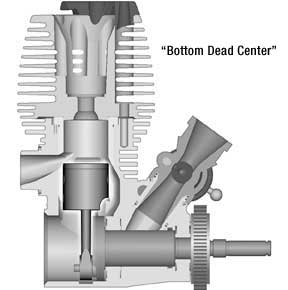
Put Piston at Bottom Dead Center
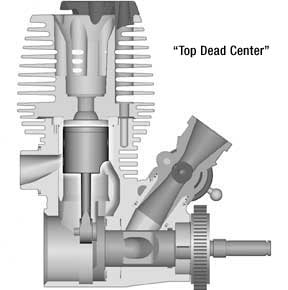
This is important to maintain the pinch in your engine. The pinch is the fit between the piston and sleeve inside your engine and is critical for performance and function. Nitro RC engines have the most pinch when they are cold and that pinch slightly lessened when the engine is heated up. If you leave your piston at top dead center (the piston is at the top of the sleeve, closest to the glow plug), the sleeve will cool down around the piston and will be stressed by the piston which can cause premature loss of pinch. Additionally, if the engine sits for a long time the piston is more likely to seize in the top dead center position.
Don’t freak out if you forget to put the piston as bottom dead center a few times, but repeated failure will cause issues including causing the piston to get stuck. If you’re piston is stuck, read this article by Traxxas on how to release a stuck piston or watch the video below.
To put the piston at bottom dead center, move the flywheel until it goes past the point of resistance and the piston is freed up. From the freed up position, you can rotate the flywheel either way and feel when the piston starts to enter the pinch of the sleeve. Just back it away from that point and you’re good.
After-run oil
After-run oil is applied to the combustion chamber and the carburetor intake after running a nitro RC. The idea is to add lubrication to the engine on the next start up and perhaps more importantly, prevent rust during long periods of storage.
Frequency
Some nitro enthusiasts think that after-run oil is critical for providing lubrication to the engine the next time it is started and therefore apply after-run oil after every run.
Others say that even when an engine is run dry there is oil left behind that will provide sufficient lubrication for subsequent starts and therefore only apply after-run oil when storing their nitro RC for 2 weeks or longer.
When starting out with nitro RCs, I took the more cautious approach and applied after-run oil after every run, but I noticed that it made the engine significantly harder to start because of the extra oil in the combustion chamber and carburetor. So I started only applying after-run oil if I knew I wasn’t going to start my RC for at least a couple weeks.
If you live in a humid climate, consider applying after-run oil more frequently as your engine will be more susceptible to rust.
Oil Type
There is after-run oil specifically made for nitro engines, like this product by Zap available on Amazon.
If you want something a little more cost effective and easier to obtain, there are 3 common alternatives:
- Marvel Air Tool Oil available on Amazon (or at your local auto parts/hardware store)
- 50/50 mix of synthetic motor oil (5w-30) and automatic transmission fluid
- Synthetic motor oil like Mobil 1 (5w-30)
- WD-40 – Traxxas recommends WD-40 in their manuals, but it is largely rejected as an adequate after-run oil by the general nitro RC community. My theory is that Traxxas recommends it because it is a common solvent that will help keep water out of the engine and it is less likely to damage their EZ-Start system like a thicker oil might. The main objection by the nitro RC community is that it won’t provide long-term lubrication or rust prevention.
I only recommend using Marvel Air Tool Oil or a nitro RC after-run oil like Zap.
Application
Remove the glow plug and apply a drop of oil, then pull the pull starter a few times (or use a starting system) to crank the engine. Repeat two times.
Remove the air filter and apply 2-3 drops of oil and then work the slide back and forth.
Don’t put too much oil in the engine or the carburetor. This can flood the engine and make it difficult to start and even cause damage to your pull starter or starting system.
Cleaning
It’s always good to do a little cleaning of your nitro RC after running it, just to keep it in decent shape and prevent dirt and grime from caking onto the vehicle. I like to grab a rag wetted with rubbing alcohol and wipe down the wheels, chassis, and shocks while paying attention to areas that have extra dirt/oil from the exhaust. Then I’ll hit the whole vehicle with some compressed air.
I find that doing a quick 2-3 minute cleaning after each run keeps my nitro RCs in good shape long term. It also is an opportunity to inspect the vehicle for any broken, worn, or loose parts.
Additional Info
- How To – Perform After-run Procedure (Traxxas)
- Nitro RC myth busting! after run oil And things you should know (thebug 404 on YouTube)